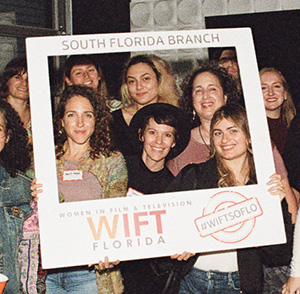
As film and television production continues to grow in Broward County, organizations such as the South Florida chapter of Women in Film & Television (WIFT) and Film Lauderdale are creating initiatives that support and elevate women in the filmmaking industry.
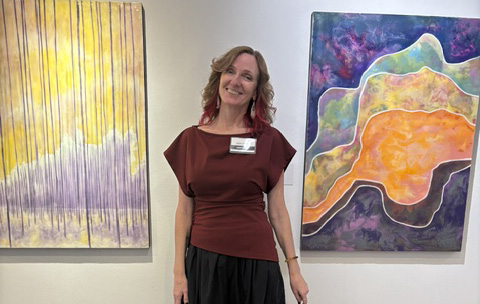
On Tuesday, January 20, WIFT welcomed local cinematographer and director of photography Tabatha Mudra to lead a cinematic lighting workshop at TBT Productions.

“Lighting is vital because it’s the component that offers us psychological comfort when we watch a film,” Mudra said. “We need that visual reassurance in our daily lives. My goal tonight is to demonstrate how to achieve cinematic lighting on a low budget so it’s accessible to anyone.”
Described as an “amazing filmmaker” by WIFT South Florida co-chair Amit Rogev, Mudra began her filmmaking career after moving to Florida in 2000 to study photography and commercial art. Drawing from her childhood in the foster care system, she incorporates a strong sense of social responsibility into her work. Mudra has partnered with organizations such as Pridelines and SunServe to create educational public service announcements for unhoused youth, and she collaborates with local institutions — including Nova Southeastern University, Florida International University, and Broward College — to produce LGBTQ+ panels and student workshops. She is currently producing horror films that explore pressing societal issues.
The event also welcomed Sandy Lighterman, Broward County Film Commissioner and president of Film Lauderdale.
“We’re here to support WIFT and local content creators,” Lighterman said.
Over her 25-year career in television and film production — including her previous role as Miami-Dade County Film Commissioner — Lighterman has witnessed significant changes for women in the industry.
“I was often the only woman on set early in my career, but that has improved,” she said.
Mudra offered a more cautious perspective.
“There has been progress, but it’s incremental,” she said. “One of the challenges women still face is that the industry can feel like a boys’ club that’s difficult to break into.”
Confidence, she added, remains another barrier.
“Women often won’t apply for a job unless they feel 100% qualified, while men will pursue the same role even if they don’t meet every requirement,” Mudra said.
This dynamic can also appear in households where both partners work in the industry.
“I know women who have received job offers and passed them to their husbands because they felt unsure, even though they were qualified,” she said.
Looking ahead, Mudra emphasized the need for continued advocacy to address gender-based pay disparities.
“Women in production roles are often paid less than men for the same positions, and there is still a wage gap in directing,” she said. “We have to keep supporting gender equity.”
This story was produced by Broward Arts Journalism Alliance (BAJA), an independent journalism program of the Broward County Cultural Division.