For many families, spending a Saturday morning exploring a crowded children’s museum or catching a Sunday theater matinee is a welcome break from the weekday daily routine. But for families of neurodivergent children, who often struggle with sensory processing, participating in certain types of activities can range from overwhelming to nearly impossible.
Julliana Escobar, whose son Gabriel, 20, was diagnosed with autism when he was five, has become an advocate for her son, always looking for opportunities for him to be included.
“Most families affected by a disability don’t see themselves out there. They hide. They seclude themselves,” says Escobar. “They don’t join what the community offers because they think it’s not suitable for their children because they flap their arms or can’t sit still. So, they don’t see themselves enjoying the experience.”
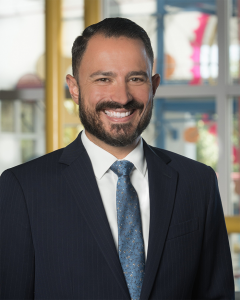
says that Sensory-Friendly Sundays advance the mission of connecting people to
science by making it more accessible. (Photo by Museum of Discovery & Science)
However, some museums and theaters across Broward County have carved out special times and showings to make arts experiences less stressful and more accessible for these families. Museum of Discovery and Science offers Sensory-Friendly Sundays — the museum opens an hour early on select Sundays for sensory-friendly exploration and activities. An IMAX show follows with the lights turned up and the sound turned down.
“Sensory-Friendly Sundays is really about being welcoming to those families who, coming on a typical museum day, might be overwhelming,” says Joseph P. Cox, president and CEO of the Museum of Discovery and Science, about the free program. “The museum is loud. It’s busy. It’s bright. There’s whooshes and bangs and things going off all the time, and if you have a child or family member who wants to be able to experience the museum but has a sensory challenge, it can be overwhelming.”
According to Victoria Fierro, M.D., developmental and behavioral pediatrician with Nicklaus Children’s Hospital, which sponsors sensory programming at the Broward Center for the Performing Arts, crowds, loud noises, bright lights, smells, and even textures can all interfere with the ability to participate or even tolerate an activity for those with sensory sensitivities.
“It could also be something as simple as your concentration. A noise that someone else can block, like the air conditioning turning on, becomes so distracting for others that they cannot function,” says Fierro.
Fierro says that sensory processing challenges are common for those with autism spectrum disorder, attention-deficit/hyperactivity disorder, and other conditions like cerebral palsy.
Because the diagnosis of autism is quite frequent, with 1 in 64 children diagnosed as on the spectrum, Fierro says that awareness about the need for sensory-inclusive opportunities is growing.
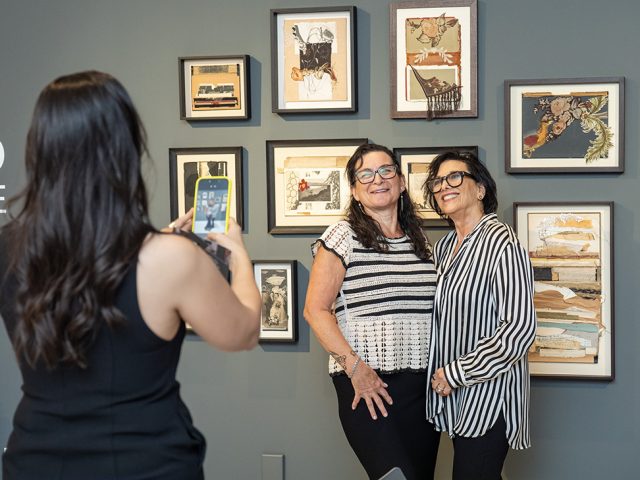
In addition to the Museum of Discovery and Science, the Broward Center for the Performing Arts, Young At Art Museum and the NSU Art Museum Fort Lauderdale have also developed sensory-inclusive programs designed to improve accessibility while also supporting visitors who need accommodations. While the specifics of the individual programs vary, each organization leans heavily on experts in the autism community, such as ABA Centers of Florida, the Unicorn Children’s Foundation, and the UM-NSU Center for Autism and Related Disabilities (CARD) to provide guidance on program development, employee training, and support at events.
Lisa Quinn, Lillian S. Wells education curator at the NSU Art Museum who launched its first Sensory Saturday in September, says that having input from people who know the community is key to a successful sensory-friendly program.
“CARD is in the business of this—offering sensory Saturdays, working with Young At Art. They helped out the Broward Center. They helped MODS. There’s only a few people in this world that know how to do this for museums. So, it was really important that we got their input,” says Quinn..
Quinn says that the free program for children 6 to 17 years old includes a quiet room, museum exploration, and art making. Also, families are placed in small groups led by an autism coach.
While sensory-friendly events differ from typical experience, the goal is the same—to create a safe place where all are welcome.
“Art is a universal language,” says Caroline Collette, marketing director of Young At Art, which was the first museum in Broward County awarded the autism-friendly partner designation by UM-NSU CARD. “It’s really important that no matter your background or what abilities you have that the environment is inclusive.”
Gustavo Padrino, senior manager of community engagement at the Broward Center, agrees.
For Padrino, welcoming, supportive, and belonging describe the experience of a sensory-inclusive show at the theater.
“We want people to be their full self. We’re not in the business of shushing people or kicking people out of the theater. The whole purpose is that we want people to be who they are and enjoy the show the way it makes them happy,” says Padrino. “So, if they want to sing, if they want to move around, if they want to dance, no one’s going to tell them no. It’s about letting them be who they are.”
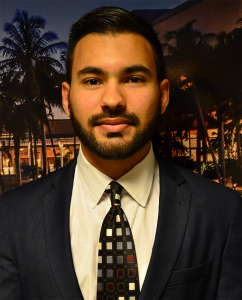
helping other cultural organizations develop sensory-inclusive events. (Photo by
Gustavo Padrino)
Sabrina London, 27, who has cerebral palsy, says that the Broward Center feels like a second home and that when she attends a sensory-inclusive show she doesn’t feel judged. London uses an augmented communication device, which speaks for her and gives off a light when in use.
“At a sensory performance, I can have my augmented device on and nobody tells me that I have to turn it off,” says London.
Like the Museum of Discovery and Science, the Broward Center also adapts the theater to make it less overwhelming.
“The lights stay on 30 percent so the theater never goes dark. The volume of the show is also reduced by 50 percent so it’s not too loud. And for people who are close to the stage that might still find it a little loud, we can provide noise-canceling headphones,” says Padrino.
Additionally, the Broward Center provides an ABA Sensory Quiet room next to the theater designed to be a calming space where families can go in and out of if a break is needed during a performance.
“We have a behavioral therapist on site that can provide some support,” Padrino says of the quiet room. “We also have a TV screen where families can still see the show, just no volume, until they are ready to go back to the theater.”
In addition to quiet rooms, other tools that the museums and the Broward Center use to support visitors are sensory maps, which lay out the level of sensory stimulation in a space, along with narratives, which are stories to prepare visitors for what they will experience, and sensory bags, which may contain items like noise reducing headphones, fidget toys, weighted lap pads, sunglasses, and sensory maps.
Cox explains that these tools help families not only more easily navigate the museum, but also better prepare for the visit.
Cox says the sensory map makes parents and caregivers aware of surprises that may trigger those with sensory sensitivities.
“A trigger, a loud noise. You go around a corner, and there’s a thing that you weren’t expecting, and so, by having sensory, friendly floor maps, we lay out where a loud noise is going to be,” he says. Also on the map are designated quiet zones. “Everything is mapped out and that helps parents talk with their children ahead of time about what they are going to do when they visit the museum.”
Fierro says that providing these experiences for neurodivergent children is also important to their families.
“Seeing your child have fun and just enjoy an event like this is very rewarding for parents,” she says. “It’s wonderful that they are making accommodations so that they can truly enjoy the experience and not just be along for the ride.”
Upcoming sensory-friendly events
IF YOU GO
WHAT : Sensory Saturdays
WHERE: NSU Art Museum, 1 East Las Olas Blvd., Fort Lauderdale
WHEN: 9:30 to 10:30 a.m., Saturday, Nov. 9
COST : Free
INFORMATION: (954) 525-5500 or
NSU Art Museum.org
IF YOU GO
WHAT : Sensory Saturdays
WHERE: Young At Art, 8000 West Broward Blvd., Plantation
WHEN: 11 a.m. to 2 p.m., Saturday, Nov. 9
COST : $12
INFORMATION: (954) 424-0085 or
youngatartmuseum.org
IF YOU GO
WHAT : “The Tales of Custard the Dragon: Sensory-Inclusive Performance”
WHERE: The Broward Center for the Performing Arts, 201 SW Fifth Ave., Fort Lauderdale
WHEN: 10:30 a.m., Sunday, Nov. 17
COST : $15
INFORMATION: (954) 462-0222 or
browardcenter.org
IF YOU GO
WHAT : Sensory-Friendly Sunday
WHERE: Museum of Discovery & Science
WHEN: 11 a.m. to 1 p.m., Sunday, Nov. 24
COST : Free
INFORMATION: (954) 467-6637 or
mods.org